RSS

I have sold a property at 201 80 Western Battery RD in Toronto

I have sold a property at 201 80 Western Battery RD in Toronto on Jul 7, 2023. See details here

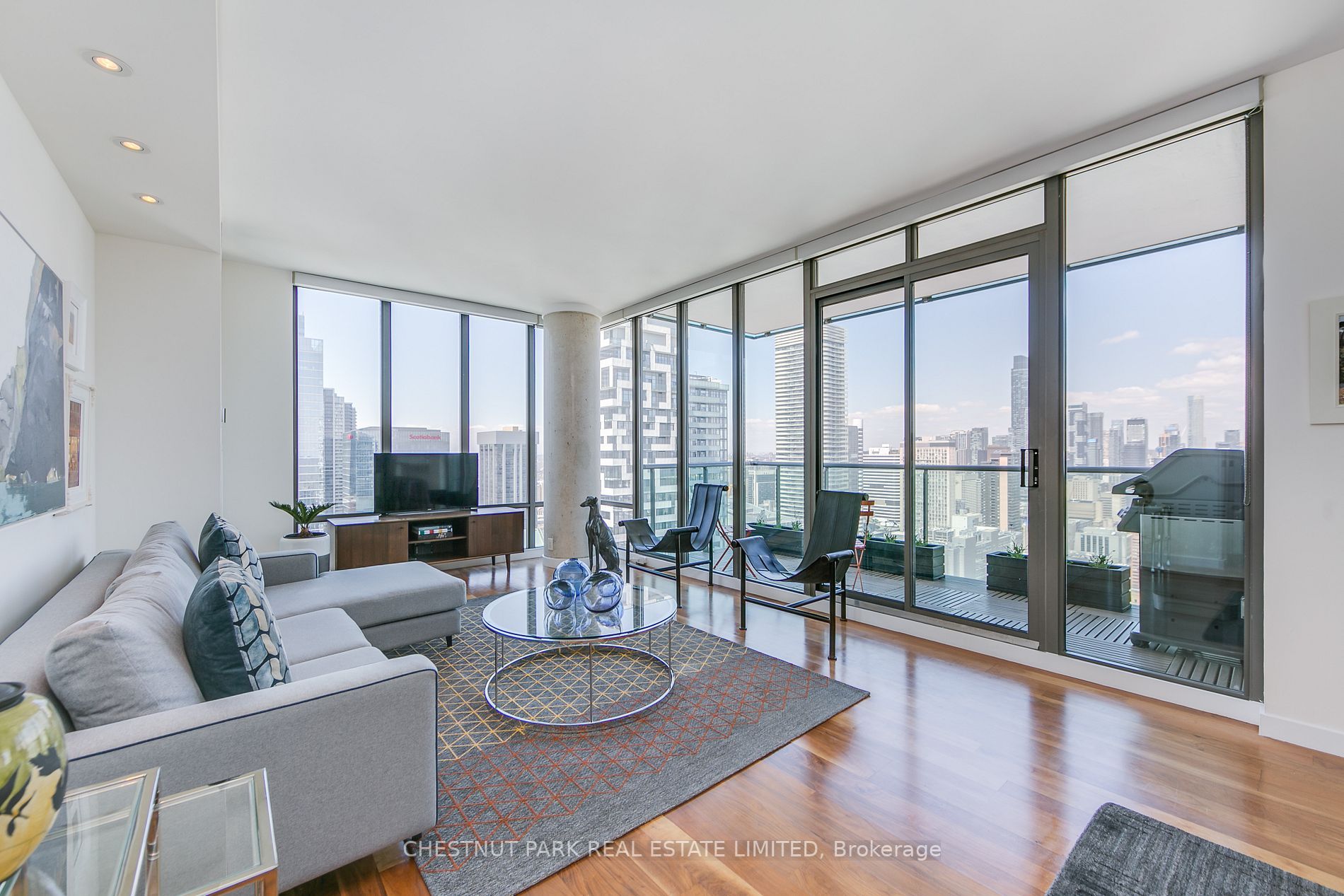
Located in the heart of Vibrant Liberty Village & designed by Award Winning interior Designer, Ceccone Simone, boasts Open Concept, well maintained floor to ceiling Windows throughout with 1 Bedroom 1 4pc Washroom with Tub, 1 Kitchen with stainless steel appliances,Ensuite laundry. Approx 90 Sq ft west facing Balcony. Building offers a Gym, Indoor Pool, Whirlpool, Steam Rooms, Party Rooms, Caterers kitchen and bar, Patios for BBQ, Sports Lounge with Pool/ Billiard Table, Theatre room and Meeting Room Floor to ceiling windows throughout. Tenant to pay hydro

Read

I have sold a property at 99 Hazelwood AVE in Toronto

I have sold a property at 99 Hazelwood AVE in Toronto on Jun 28, 2023. See details here

Location, Location!! One Of The Most Coveted Streets On The Danforth! Walking Distance To 2 Subways, Withrow Park, Danforth Restaurants And Proposed Ontario Line Lrt. Highly-Ranked Frankland Community & Riverdale Collegiate School Districts!! Just One Block South Of The Danforth. This Lovely 3 Bedroom Home has been beautiful renovated and Is In Move-In Condition. Bright open concept living/dining/kitchen, Hardwood throughout, Breakfast bar and loads of cupboards. Quartz countertops, Stainless steel appliances. Solarium off the kitchen with walkout to landscaped garden. Finished basement with renovated 3 pc bath, Semi Detached Garage large enough to park a midsized SUV, a built-in storage system, shelving and tire rack that is accessed off the lane. What A Great Opportunity To Get Into This Tightly-Knit Family-Friendly Neighbourhood!

Read

I have sold a property at 501 665 Kingston RD in Toronto

I have sold a property at 501 665 Kingston RD in Toronto on Jun 4, 2023. See details here

Terrace Terrace Terrace. Approx 450 Sq Ft Of South Facing Terrace Overlooking The Tree Tops Of The Upper Beach And The Lake Ontario, Fantastic Outdoor Entertaining Space Equipped With A Gas Line, Electrical Outlet, Out Door Lighting And Water. This 1295 Fq Ft Suite Offers An Open Concept Living/Dining/Kitchen With Hardwood Floors And A Walkout To The Terrace. 2 Bedrooms Both Facing South. The Primary Has A 4 Pc Ensuite, A Walk-In Closet And A Walk Out To The Terrace. 2nd Bedroom Has A Large Double Closet With Built-Ins And A 4Pc Across The Hall. There Is A Separate Laundry Room With Built-In Cabinets, Folding Counter And Tile Floors. One Parking Spot And Two Lockers. Plenty Of Visitor Parking Available

Read

I have sold a property at 8 Martinview CRT in Toronto

I have sold a property at 8 Martinview CRT in Toronto on May 25, 2023. See details here

Did You Say Ravine? And On A Quiet Cul-De-Sac. The Tranquil Ravine Setting Creates A Cottage Feel In The City. It's 1309 Sq Ft Above Grade, A Large Living & Dining Room W/Fireplace, 3 Bedrooms, 2 Bathrooms, A Large Eat-In Kitchen & A Main Flr Office With A Walkout To A Deck. The Lower Level Is Finished With A Family Room & Gas Fireplace & A Walkout To The Ravine, A Renovated 3 Pc Bath, Large Laundry Rm, Cold Rm. A Single Car Garage And Private Drive For 2 Cars.

Read

I have sold a property at 59 Sibley AVE in Toronto

I have sold a property at 59 Sibley AVE in Toronto on May 29, 2023. See details here

Fabulous Detached East York 2 1/2 Storey Home, Steps From Dentonia Park And A Short Walk To Victoria Park Subway. This Home Is Ideal For The First Time Buyer. Spacious Formal Living & Dining Rooms With Hardwood Floors That Continue Throughout The House. A Family Sized Eat-In Kitchen With Loads Of Cupboards And Stainless Steel Appliances. The Second Floor Offers 2 Bedrooms And A 4Pc Bath. The Partially Finished Basement With Separate Entrance, Would Work Well As A Recreation/Family Room Or Potential Nanny Suite. East Facing Deck, Deep Yard And A Oversized Barn Style Garage For 2 Cars Great Potential For Studio Or Man Cave.

Read

I have sold a property at 4302 33 Lombard ST in Toronto

I have sold a property at 4302 33 Lombard ST in Toronto on Jun 5, 2023. See details here

Spectacular Suite From The Penthouse Collection, Breathtaking Views-Amazing Sunsets. 1408 Sq Ft, Floor To Ceiling Windows, 2 Terraces (Gas Line), 2 Brs, A Den/Bedroom, 2 Baths, Custom Closets & Laundry Room. Kitchen Has Been Opened From Original Plan To An Open Concept With Custom Cabinetry, Stainless Steel Appl, Gas & Amazing North Views. Master Offers A W/I Closet, 5Pc Bath. Ideal Condo Lifestyle Great For Entertaining. **3rd Br Currently Used As Office**Parking And 2 Lockers

Read

December 2023 Toronto Real Estate Market Report

2023 has ended, and from a real estate perspective, it has not been one of the industry’s more shining years. In 2023, only 65,982 resale properties were reported sold for the entire Greater Toronto Area. One would need archeological skills to find a less robust year, as the chart below clearly indicates.


What makes 2022 and 2023 numbers concerning is the fact that population in the Greater Toronto Area has grown by almost 15 percent since 2011. In 2011, the area’s population was 5,593,000. As a result of high levels of immigration, as we enter 2024, the population of the area is now approaching 6,400,000. With growth of almost 1 million people since 2011, and without the impact of the pandemic, first government liquidity, and then the Bank of Canada’s tightening monetary policy, the greater Toronto resale market should be producing 100,000 to 105,000 reported sales annually.


So, what happened in 2022, and more significantly in 2023? Simply stated, affordability was beyond the grasp of most buyers. The Bank of Canada began its benchmark rate hikes in 2022, and then continued in draconic fashion to increase its policy rate in 2023. In July of 2022, the policy rate was 2.50 percent. By July of 2023 it had doubled to 5.00 percent, where it currently remains.


As the Bank of Canada increased its rate, sales began to decline. In early 2023, the Bank did not implement any increases. As a result, in May 8,962 sales were recorded, the highest for any month in 2023. In June and July, the Bank took its policy rate from 4.50 to 5.00, decimating the resale market. What made it worse is that the Bank continued to threaten that more rate increases were possible. In June reported sales dropped to 7,432 and to 5,224 in July. Further declines were reported throughout the remainder of the year, with 3,444 reported in December. Annus horribilis. The cost of borrowing made market accessibility almost impossible for most buyers. Five-year fixed mortgage interest rates were more than 6 percent. In January of 2020, just prior to the pandemic, a five-year fixed rate was trending at approximately 2.89 to 3.09 percent. By March 2022, rates had increased to approximately over 4 percent. As mortgage interest rates continued to increase, the correlation to declining sales volumes was direct and immediate.


What made declining sales worse, (in fact sales volumes in 2023 were reminiscent of sales volumes experienced during the real estate recession of 1990’s), was the fact that average sale prices remained strong, making affordability that much more challenging for buyers.


The average sale price achieved in December of this year was 3.2 percent higher than the average sale price of $1,050,569 achieved last year. There were several factors responsible for this sale price stability.


Although the cost of borrowing increased dramatically over the last two years, these increases had no impact on homeowners who purchased properties through the pandemic. The bulk of mortgage renewals are not scheduled until late 2024 and beyond.


Consequently, supply was not accelerated by mortgage renewals. Secondly, demand has increased. Massive population growth requires housing. Housing is not being built in sufficient numbers, and those that have bought, with favourable mortgage interest rates, are not moving. Moving would mean taking on new mortgage financing at substantially higher rates, in some cases three times their current rate. Within the massive demand cohort there are some who were able to pay the steady prices demanded by sellers, and by doing so, have kept averages sale prices high.


Average sale prices for freehold homes have remained particularly strong. In December, which seasonally is the slowest resale month in the year, the average price for detached properties in the City of Toronto came in at $1,629,980, about the same price they sold for in December 2022. Reflecting the slow down in the resale market they sold for only 97 percent of their asking price, and they were on the market for 31 days. Last December, sale prices were close to 100 percent of list price, and they sold in about 27 days. Semi-detached properties sold for 98 percent of their asking price and in only 28 days and were 1.5 percent higher than last December’s prices. The average sale price for semi-detached properties in December came in at $1,173,171.


It is no surprise that the average sale price for condominium apartments continues to decline. In December, in the City of Toronto the average sale price declined by more than 4 percent to $709,283 and to $780,258 in Toronto’s central core. Condominium apartments are the entry point for most buyers, especially the first-time buyer cohort. This group of potential buyers is most affected by high mortgage borrowing costs. No doubt, investor units are part of this condominium apartment supply inventory. Investor units, particularly if there is any financial distress, involve different pricing and sales dynamics than sales by homeowner sellers.


Although the overall 2023 resale market was bleak, there are some positive indications in December’s resale data. Sales results for December (3,444), although low, were almost 12 percent better than last year’s numbers, the first month since July in which this year’s monthly sales were an improvement over the same month last year. The average sale price remained strong, with only the condominium apartment sector showing continued weakness. In Toronto, sales of detached properties were up by more than 20 percent compared to last December, and sales of semi-detached properties were up by an eye-popping 56 percent compared to last year. Anecdotally, multiple offers were once again appearing for properties in sought- after neighbourhoods. This is no doubt an early indication that some buyers have concluded that the resale market has reached its low point, and that sales and price improvement is about to begin. In December, there was an indication that mortgage interest rates have begun to decline. Lenders are now offering five-year fixed rates as low as 5.75 percent.


Canada’s inflation has held steady at 3.1 percent. This has prompted the Bank of Canada to indicate that its benchmark rate may start to decline in 2024. Most economists are predicting a 0.25 percent decline by the first quarter and 0.75 percent decline by year end. All these factors combined are pointing to a much-improved residential resale market in 2024. Assuming that the first benchmark rate cut will not occur until early in the second quarter, it is anticipated that the first quarter of 2024 will remain slow, not dissimilar to the first quarter of 2023.


Following the first benchmark rate reduction, the market will pick up momentum. That momentum should result in a very strong resale market in the second half of 2024. The average sale price should increase by about 6-8 percent, taking the year-end average sale price to approximately $1,200,000, including condominium apartments. In December 2023, the average sale price was $1,084,692. The annualized average sales price for all properties sold in 2023 was $1,126,604. Sales volumes will also increase in the second half of 2024 to bring 2024’s year end total to approximately 75,000 to 78,000 properties sold. These numbers are far weaker than historical resale norms, however, higher sales volumes will continue to be constrained by affordability challenges, particularly freehold properties (detached and semi-detached). It won’t be utopian, but neither will it be another annus horribilis.

Read

November 2023 Toronto Real Estate Market Report

To paraphrase T.S. Elliot, the Toronto and Region residential resale marketplace is ending the year not with a bang, but a very quiet whisper. November sales totalled 4,236 homes, down by 6 percent compared to the number of sales reported last November. This is the lowest number of sales reported for November since the economic downturn of 2008. As mentioned in previous market reports, the number of reported sales is particularly low when it is remembered that the Toronto Region’s population has grown by more than 20 percent in the intervening 15 years.


November marked the third consecutive month when total reported sales were less than 5,000. As 2023 comes to an end, there is an uncanny similarity to the way the year 2022 ended after the Bank of Canada implemented its punishing benchmark rate hikes.


Notwithstanding historically low sales numbers, the average sale price for all residential properties sold continues to hold firm and is ending the year stronger than last year’s sale prices for the same period. Over the period of August to November, sales were 6.7 percent higher in 2022, whereas average sales prices are 1.5 percent higher in 2023.


Strong sale prices in the face of declining sales are a market anomaly. There is, however, an explanation for this development. Until recently, supply has remained low. Even in November, only 10,545 new listings came to market, 16.5 percent higher than the 9,053 that came to market last year. At month end, there were only 16,759 properties available to buyers. Although this is an increase from previous months, it is still relatively low by historic standards.


The other side of the equation is demand. With the incredible surge in population growth in the Toronto Region, there are many more potential buyers looking for homes. Unfortunately, these buyers are constrained by a lack of affordability. Five-year fixed mortgage interest rates are over 6 percent, and to qualify, borrowers must pass the prevailing stress test, requiring them to qualify at more than 8 percent. There are, however, buyers that do have money and they are the ones participating in the resale market, keeping prices from falling noticeably. Unfortunately, there simply are not enough of them to push sales numbers higher.


This is most evident in the City of Toronto’s resale numbers. In November, the average price for detached properties came in at $1,617,918, 3.5 percent higher than last November. The same was true for semi-detached properties, wherein sale prices came in at $1,217,811, 2.4 percent higher than last year. Only condominium apartment sales and average sale prices retracted. Condo sales in the City of Toronto were down by 8.2 percent and average sale prices declined by 1.7 percent, to $720,280. Although condominium apartments are the least expensive housing type in Toronto, condominium apartments are the housing form sought out primarily by first time buyers who, regretfully, are financially the most vulnerable purchasing group. Almost 70 percent of all condominium apartment sales take place within the City of Toronto. At the end of November, there were 6,579 condominium apartments available to buyers in Toronto and the surrounding Region. Condominium apartments represent almost 40 percent of the Toronto and Region’s available inventory.


Unless the Bank of Canada eases its monetary policy – which is not expected to happen until at least the second quarter of 2024 – sales will remain low, at their current levels. If inventory increases, as expected, then eventually we will see some decline in average sale prices and a corresponding increase in sales numbers. That scenario is beginning to play out now but won’t be clearly evident until the market passes through the Holiday Season. In November, the months of inventory on market moved up to 2.4 months. In tandem, the sales-to-list ratio for all properties that came to market moved to 46.2 percent, approaching the 40 percent buyers’ market threshold. For the third consecutive month, the sale-to-list price ratio came in at 98 percent and the days on market moved up to 25 days, 13.6 percent higher than the 22 days properties spent on the market in November 2022.


These are all indications of a slowing market, constrained by affordability.


As the year comes to an end, only 62,576 properties have been reported sold. It is unlikely that December sales will substantially exceed 3,000, which means that 2023 will end the year with approximately 65,000 to 66,000 reported sales – a number that we have not seen in more than 2 decades. Last year, 75,049 properties were reported sold in the Toronto Region. Between 2010 and the beginning of the pandemic, yearly sales varied, with reported annual sales generally coming in at 85,000 or more. Between the years 2014 and 2017, sales exceeded 90,000 homes sold, with more than 100,000 properties reported sold in 2015 and 2016, while 2018 was an outlier with only 78,107 sales. That was the year the provincial government implemented the foreign buyer’s tax, which currently rests at 25 percent of the purchase price.


To paraphrase Queen Elizabeth’s 1992 speech… “2023 is shaping up to be a real estate market annus horribilis”

Read

October 2023 Toronto Real Estate Market Report

In many ways, the Toronto and area residential resale market reflected September’s results in October.  Sales volumes were practically unchanged, further emphasizing how sluggish the market has become and they continued the string of historically low sales numbers for this time of the year.


In October, 4,646 residential properties were reported sold, almost 6 percent fewer than the 4,930 reported sales last year. Year-to-date, 56,367 homes have changed hands. Based on the current pace of sales, the year will finish with about 70,000 reported sales. Aside from 2018, (and of course, 2022, when the Bank of Canada began its draconian rate increases when only 78,017 homes changed hands), we have to go back 2 decades to see such low sales numbers. The low sales volumes in 2018 were due to the implementation of the then Liberal government’s 2017 Ontario Fair Housing Plan.


The Plan introduced a non-resident speculation tax (NRST), and it expanded rent control to all private rental units, including those built after 1991. A government statement at the time boasted that the Plan was designed to “make housing more affordable... to create fairness and opportunity during this period of rapid economic change”. Since the implementation of the Plan, the NRST has increased from 15 percent to 25 percent of the purchase price of a property. In 2017, the average sale price for properties sold in the greater Toronto area was $822,510. This October, the average sale price for all properties sold came in at $1,125,928, an increase of 37 percent over the last six years. Affordability has clearly not been achieved. A clear indication of the ineffectiveness of government intervention in the residential resale marketplace, particularly when that intervention is politically and not realistically motivated.


Surprisingly the average sale price has continued to rise while sales volumes have declined.


Early in the year, the average sale price had strengthened. Buyers acted confidently during the Bank of Canada’s lull in benchmark rate hikes. Once the Bank again started to implement rate hikes in June and July, the average sale price dropped to a low in August. Since August, the average sale price has once again strengthened. In October, the Bank held its benchmark rate at 5 percent. It is clear that the Toronto and area real estate market dances to whatever tune the Bank of Canada plays.


Toronto’s strong average sale price is one of the few positive signs in the resale market. In October, for the first time in many months, the average-sale-to list price came in at 99 percent (although in the City of Toronto it came in at 100 percent) for all properties sold. Since late 2020, the sales-to-list ratio has always exceeded 100 percent. The sales-to-list ratio was also much lower than we have seen since the depths of the Covid pandemic. In October, the sales-to-list ratio for the greater Toronto market was 47.3 percent. It was lower in the City of Toronto, coming in at 45.8 percent, due to sluggish condominium apartment sales. Before the Bank of Canada began implementing its punishing policy rates, the sales-to-list ratio was around 70 percent.


What is interesting is that properties that do sell are not spending lengthy periods of time on the market before being reported sold. In October, (on average) all properties (including condominium apartments) spent only 21 days on market: exactly the same number of days as October 2022. Depending on housing type and location, some properties were “flying off the shelf”. For example, detached properties in the City of Toronto all sold in 17 days, and for 100 percent of their asking price. Semi-detached properties all sold in 13 days and for 103 percent of their asking price.


Condominium apartment sales were not nearly as robust. Across the region, it took 26 days for condominium apartments to sell. They sold at 98 percent of their asking price. The average sale price came in at $729,160, almost 2 percent lower than last year. This is not surprising given that of the 8,535 listed properties available for sale in the City of Toronto, 4,825, or 57 percent, are condominium apartments.


Going forward, rising inventory levels may begin to erode the strong, prevailing average sale prices that are being achieved. In October, 14,397 new properties came to market, a 38 percent increase compared to the 10,433 that came to market at the same time last year. These new homes that came to market have increased available inventory levels to 19,540 properties, more than 50 percent higher than the 13,019 properties available last year. It is anticipated that a large number of five-year term mortgages will be coming due in 2024 and 2025. If the current high mortgage rates stay in play – five-year term mortgage interest rates are currently slightly more than 6 percent – no doubt some renewing borrows will be forced to sell and perhaps even go into default. In October, Canada’s main banking regulator directed banks to hold more capital against mortgages that have seen their repayment terms extend beyond their original terms owing to the pace of interest rate hikes. A cautious step to contain risks that are building in Canada’s mortgage market.


Interest rates and affordability are driving, or rather controlling, the Toronto and area marketplace. The Bank of Canada’s pause in October was highly welcomed by consumers and particularly mortgage borrows and buyers. For the market to pick up, even to pre-Covid levels, the Bank of Canada will have to reduce rates. The pent-up demand can not wait for that to happen. As it stands, it is a fractured market, with strength in some areas – price, depending on housing type and location – but weaknesses in others – sales volumes.


Read

September 2023 Toronto Real Estate Market Report

The Toronto and Region residential resale marketplace is, to say the least, confusing. The numbers reported by the Toronto Regional Real Estate Board depict a market in the doldrums with sales volumes having declined for 4 consecutive months, reaching levels more consistent with sales volumes achieved more than two decades ago when the greater Toronto area had a population almost half of what it has today.


Although there is some seasonality in these numbers, August and now September’s performance is low beyond any seasonal impact. 


What we also see in September is a sharp increase in residential inventory. In September 16,258 homes became available for sale. This represents a 44.1 percent increase compared to the 11,281 properties that came to market last year. As we begin October buyers have 18,912 properties to choose from, almost a 40 percent increase compared to the mere 13,529 that were available to buyers last year. About 35 percent of the market’s active inventory is condominium apartments. 


Historically this scenario, low sales volumes and dramatically increasing available inventory, would mean only one thing - falling average sale prices. But that is not what is happening. Surprisingly average sale prices are strengthening, notwithstanding that almost 40 percent of the available inventory is condominium apartments and townhouses.


In September the average sale price came in at $1,119,428, 3 percent higher than the average sale price achieved last September ($1,086,538). More significantly September’s average sale price for all properties sold (including condominium apartments and townhouses) was 3.5 percent higher than the average sale price of $1,082,569 achieved in August.


There is no precedent for these market conditions. No doubt because no market in the past has come through a pandemic, enormous government stimulus, inflation, and then a draconian monetary policy implemented by the Bank of Canada. Added to this incredible mix of extreme economic and social factors is soaring population growth driven by immigration. In 2022, Canada’s population grew by more than 1 million people, many finding their way to southern Ontario. Canada sent 17,145 new permanent residents and express entry draws in September alone (Immigration News Canada).


If we dig a little deeper into the numbers we see that detached and semi-detached properties are selling at a ferocious pace. All detached properties in the City of Toronto sold in a mere 16 days and at 101 percent of their asking price. The average sales price was $1,724,007. All semi-detached homes sold in an eye-popping 11 days at 106 percent of their asking price. The average sale price for all semi-detached properties reported sold was $1,281,956.


Not surprisingly condominium apartments did not move at the same pace. A typical condominium apartment took 25 days to sell and at only 99 percent of its asking price. The average price for all condominium apartments sold was $732,106. Based on the number of available condominium apartments in Toronto (4,539) and the number of reported sales (850), this equates to almost 5.5 months of inventory.


So what do we make of these numbers? Put simply it is a market of “haves and haves not”. Population growth has created demand. Supply, while growing, is still low, particularly in the detached and semi-detached sectors. Within the demand sector, there are those buyers who can, notwithstanding the prevailing high financing costs, afford to purchase detached and semi-detached properties that become available. They do so quickly and often pay over the asking price. Regretfully the number of buyers that fall into the “haves” is small, hence the declining monthly sales. Financing costs are turning most aspiring buyers into “haves not”. Most of the latter look to condominium apartments, the least expensive housing type available to buyers. That’s why condominium apartments are taking longer to sell and do so below their asking prices.


Dejardins recently completed a study of the prevailing resale market. It concluded that the market could go in one of three ways. An early 1990’s restructuring, with declining sales volumes and average sale prices over a protracted period of time. A mild recessionary market with average sale prices declining moderately by about 6 percent. Or a market in constant stress between supply and demand in the face of painful mortgage financing. In this market scenario sales would decline but prices will, because of the demand, continue to rise, albeit moderately.


It appears that we have entered the third market scenario. Early October numbers at least for now, to confirm this assessment.


Read

August 2023 Toronto Real Estate Market Report

There were no surprises in the residential resale data for the month of August. As forecast in last month’s Report, while the benchmark rate of the Bank of Canada remains at its lofty rate – it is currently 5.0 percent – and the average sale price for all properties sold, although declining, is still high, sales volumes will remain low. And that is what happened in August.


During the month of August, only 5,294 residential properties were reported sold. In July, 5,245 properties were reported sold. Compared to August of last year, sales declined by 5.2 percent. In August of 2022, 5,584 properties were sold. Declines in sales volume were particularly noticeable in the case of detached (minus 12 percent) and semi-detached properties (minus 14.4 percent) across the region. By comparison, condominium apartment sales volumes increased by 7.6 percent compared to last August. These numbers are clearly a reflection of the affordability barriers impacting buyers.


The average sale price of detached ($1,416,366) and semi-detached ($1,067,980) properties is almost double the average sale price of condominium apartments. In August, the average sale price of condominium apartments throughout the region was $705,572. It was slightly higher in the City of Toronto, coming in at $724,549, and $760,485 in the City’s central core, where 63 percent of all condominium apartment sales take place.


Once again, the sales of detached and semi-detached properties that took place did so at a pace and at sales- to-list ratios that are more consistent with a classic robust market, notwithstanding the low sales volumes. In the City of Toronto, all detached properties sold in 18 days and at 101 percent of their asking price. Semi-detached properties moved even faster. All sales took place in only 13 days and for 105 percent of their list price. In Toronto’seastern districts, all semi-detached properties sold in only 11 days and at 107 percent of their asking price. In isolation, these sales numbers would reflect a resale market that’s on fire.


Underlining this performance are several factors. Firstly, although supply improved in August, it is still historically low. During the month of August, 12,296 properties came to market, 16.2 percent more than the 10,578 homes that came to market for the same time last year. The increase in inventory remains historically low. Secondly, demand remains extremely high. This is due primarily to much higher population levels as a result of the tremendous increase in immigration. In August alone, Canada welcomed 100,000 new immigrants, at least half making their way to southern Ontario. Thirdly, mortgage interest rates, coupled with 2 percent stress testing, make the purchase of detached and semi-detached properties at their current price points prohibitive. Essentially, what this data is telling us is that demand is high, but few buyers can afford Toronto real estate. Those who can buy, are buying quickly, and paying above the seller’s asking price.


Condominium apartments are the only housing type that is showing rising sales volumes. In August, condominium apartment sales (1,086) increased by 6.5 percent compared to August 2022. In the 905 region condominium sales (523) increased by 10.17 percent. These are properties that buyers can afford.


Given the fact that we are unlikely to see a decline in the Bank of Canada’s benchmark rate until the middle of 2024, in fact, we may experience an increase before that time, and given the fact that household incomes are not increasing dramatically, we may be in the early stages of a market restructuring. (In 2021 the median economic family income in Toronto was $106,000. City of Toronto Census Study). A market restructuring took place in the early 1990s and there are indications that we may be about to re-experience that era.


From 1985 to the spring of 1989, average sales prices in the Toronto region increased by an eye-popping 113 percent. During this period, there were factors at play that were not dissimilar to today, particularly tremendous demand. Even though mortgage interest rates were much higher than they are today, there was an unmitigated belief that wealth could only be achieved and preserved by buying and owning real estate. As a result, there was a market frenzy, not unlike the height of the pandemic. It was this frenzy that caused prices to escalate by 113 percent in a mere 4 years.


In 1989, interest rates increased to 12.29 percent, and then to 13.04 in 1990. These increases and their negative economic impact brought Toronto’s resale market to a halt. Average sale prices began to decline and continued to do so for more than 6 years. At their peak in 1989, the average sale price for a Toronto home was $273,698. By 1996, the average sale price had slid to $195,169, a decline of 28.5 percent.


The decline in sales volumes and average sales prices came to an end in 1996 because by 1996, mortgage interest rates had fallen to 4.53 percent (Statistics Canada). The confluence between lower average sale prices and mortgage interest rates made real estate in the Toronto region once again affordable. Because ofpersistently low mortgage interest rates, it has remained affordable, until the Bank of Canada commenced its benchmark rate hikes in March of 2022. We have seen 10 rate increases since then.


If the cost of borrowing remains high, we may have to wait until the confluence of lower average sale prices and lower borrowing costs connect to drive an increase in sales volumes, as occurred in 1996. The demand is certainly there, and growing, as Canada’s latest immigration numbers attest. In future reports, we will monitor this data to determine if we are indeed into a similar market restructuring as occurred more than 30 years ago.


Read

July 2023 Toronto Real Estate Market Report

On a year-over-year basis, July’s residential resale market results were quite favourable. The 5,250 sales reported were almost 8 percent higher than the 4,870 properties reported sold last July. The average sale price for all properties sold came in at $1,118,374, a 4.2 percent improvement compared to the average sale price of $1,073,213 achieved in July last year. Even days-on-market improved by 10.5 percent, from 19 to 17 days this July.


However, by July 2022, the Bank of Canada had implemented 4 increases taking the benchmark rate from 0.25 percent to 2.50 in only four months. Although more rate hikes were on their way, by July of last year the resale landscape had changed dramatically and negatively. Sales were grinding to a halt and the average sale price was plummeting. In February of 2022, the average sale price was $1,334,000, and by July the average price had declined to $1,073,000. The decline in sales was even more dramatic in March 2022, where 10,861 homes were reported sold, and by July that number had declined to 4,870, a shocking 55 percent.


The real story is what has happened to the resale market since May of this year when, in its wisdom, the Bank of Canada once again decided to increase its benchmark rate. Having increased its rate 8 times since March of 2022, it raised its rate both in June (0.25 percent) and in July (another 0.25 percent), bringing the benchmark rate to 5 percent - the highest it has been in more than 20 years. As sales and average sale prices declined through the second half of 2022, sales and average sale prices have declined since the Bank of Canada has begun to increase rates once again in June and July of 2023, an unsettling similarity to what happened in 2022.


The decline in reported sales since May is 42 percent, with a decline of 30 percent when July sales are compared to those of June of this year. These results unequivocally indicate how powerful the impact of Federal monetary policy is on the real estate market. Interestingly, the decline in average sale prices, which has also taken place, is not nearly as dramatic as the decline in sales. Compared to a 42 percent decline in sales, the 3 percent decline in average sale prices is negligible.


Ironically, the decline in reported sales and average sale prices is not an indication of a weak market. Rather, it reflects affordability, or stated more accurately, the lack of affordability. Each rate hike that the Bank of Canada implements makes it that much harder for buyers and in many instances removes them from the market. Those buyers that have the financial ability are still engaged and continue to drive the market in ways that appear to be incongruous with sales and average sale price numbers.


In July, all 5,250 properties reported sold were contracted after only 17 days on market (on average), while all properties sold for 102 percent of their asking price. In the City of Toronto, properties sold for 103 percent of their asking price. Detached properties in the City of Toronto, which had an average sale price of $1,641,000, sold at 102 percent of their asking price, whereas semi- detached properties ($1,257,000) sold for 108 percent of their asking price. In Toronto’s eastern districts, semi- detached properties sold for an eye-popping 113 percent of their asking price and in only 11 days. These numbers reflect a market that is extremely robust. Unfortunately, because of a lack of affordability generated by the Bank of Canada, some buyers simply can’t participate in it.


If these conditions persist – that is if the Bank of Canada continues to implement further increases to its benchmark rate – there is likely to be further compression of average sale prices. To date, the market has seen no forced or panic selling by homeowners. If high rates persist deep into 2024, more properties will come to market as homeowners are forced to deal with the prevailing high mortgage interest rates on the renewal of their mortgage. There is some, though scant, evidence that this may have happened in July where 13,412 new properties came to market, 11.5 percent higher than the 12,294 that came to market in July of 2022. At the beginning of August, there were 15,371 homes available to buyers, slightly more than the 15,329 available last year. The significance of this 0.3 percent increase is that it is the first positive variance, year-over-year, that we have seen since the beginning of the pandemic.


As we move into August and the second half of 2023, current market conditions will persist unless the Bank of Canada weighs in and either increases or decreases its benchmark rate. Considering that Canada’s Consumer Price Index was only 2.8 percent in June, following a 3.4 percent increase in May, and with the economy showing signs of weakness, it is unlikely (we hope) that the Bank will implement any new increases. That means that those buyers that have the financial ability to engage in this market will continue to do so but in fewer numbers. If more properties come to market, we will see increased pressure on average prices, as buyers have, for the first time in years, more choice.


Read
This website may only be used by consumers that have a bona fide interest in the purchase, sale, or lease of real estate of the type being offered via the website. The data relating to real estate on this website comes in part from the MLS® Reciprocity program of the PropTx MLS®. The data is deemed reliable but is not guaranteed to be accurate.